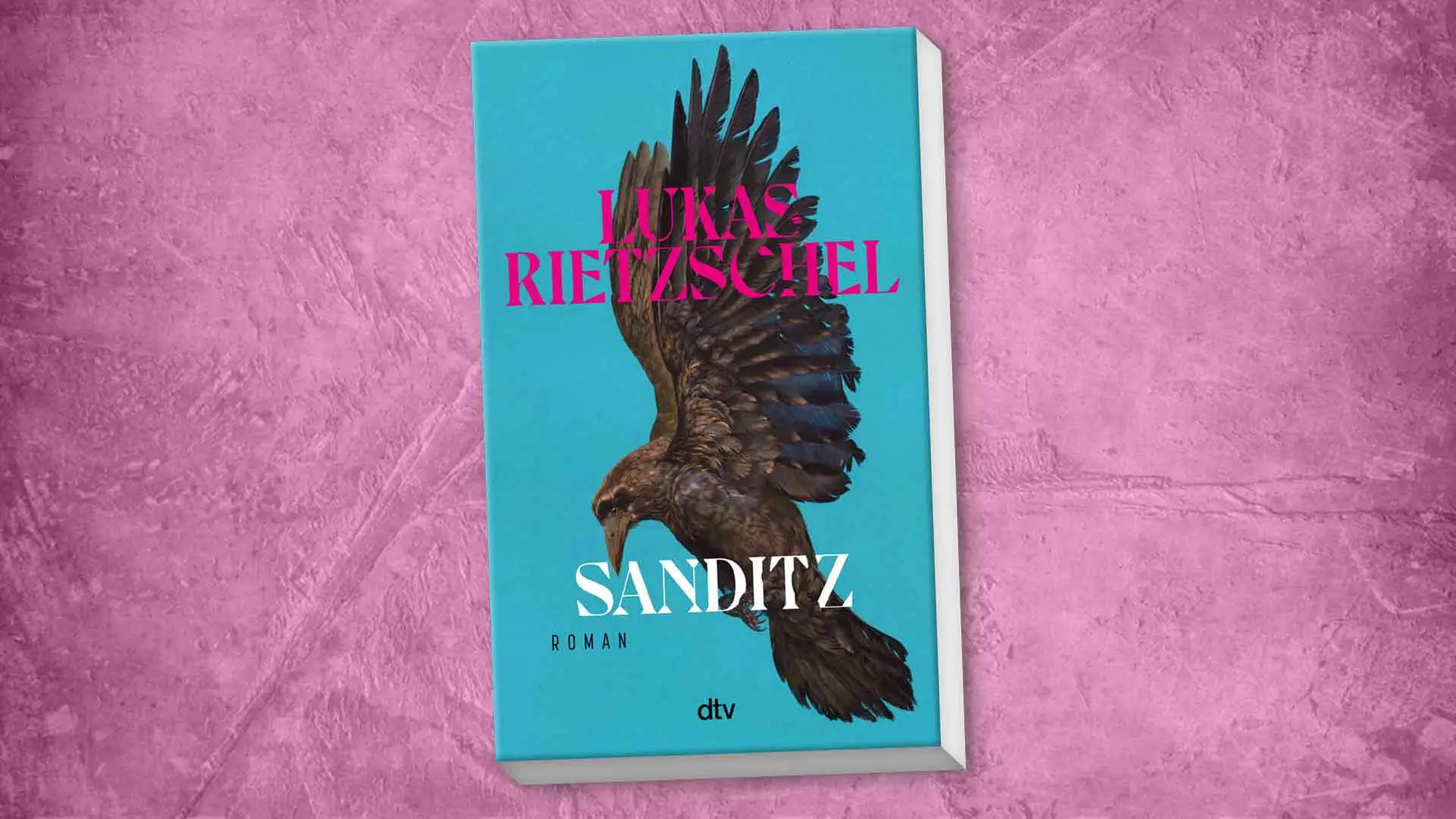
Lukas Rietzschel's Sanditz: Unpacking Post-Wende Life in a Saxon Kleinstadt
Lukas Rietzschel's "Sanditz" is more than just a novel; it's a meticulously crafted tapestry that weaves together three generations of a Saxon family, the profound aftermath of the German reunification, and the unprecedented challenges of the early 2020s. This "Sanditz Buch" stands as a vital piece of contemporary German literature, offering an unvarnished yet deeply empathetic look at life in a fictional small town in the Oberlausitz region. Through the Wenzel family, Rietzschel explores the enduring legacies of the past, the search for identity in a rapidly changing world, and the silent struggles that define a generation born into the shadow of a divided Germany.
Born in 1994, Rietzschel himself embodies the very generation he portrays. Often described as a "shooting star" of the post-Wende era, his quiet demeanor and unglamorous public image resonate with the authentic voice he lends to his characters. His third novel, "Sanditz," garnered significant critical acclaim, with many arguing it deserved a place on the shortlist for the prestigious Leipzig Book Fair Prize. It's a work that asks what it means to be East German in a unified nation, grappling with inherited histories and the ever-present pull of roots.
The Wenzel Family: A Microcosm of East German Identity
At the heart of "Sanditz" lies the Wenzel family, whose individual journeys and collective tensions form the narrative backbone. We meet Maria, Dirk, Tom, Marion, Roland, Erika, and the specter of Norbert – each character a meticulously drawn representation of differing experiences and expectations in post-Wende Germany.
- Dirk Wenzel: The Quest for Purpose
Dirk, Maria's uncle, is a figure of gentle pathos. His aspiration to be an "Opa" (grandpa), emblazoned on a poster, speaks volumes about a yearning for traditional roles and belonging in a society where personal trajectories can feel uncertain. His first sexual encounter, occurring shortly after his mother's death, hints at a life marked by emotional delay and the profound, often unspoken, influence of family dynamics. Dirk represents the lingering sense of unfulfilled potential and the quiet struggle for meaning in a world that often feels indifferent. - Maria: Navigating Identity Between East and West
Maria, Dirk's niece, encapsulates the quintessential experience of the younger, post-Wende generation. Studying in Kassel, she confronts the pervasive "Ost-Klischees" (East German clichés) from her West German peers. Her defiant self-introduction as "die Mandy aus Dresden" is a poignant act of reclaiming agency and challenging stereotypes, even if through a performative identity. Her eventual return to the Lausitz, mirroring Rietzschel's own path, underscores the enduring magnetic pull of home. Maria's internal "dictionary" of the East – the tall, copper-brown pines, the Elbe and Elster rivers, horizons framed by hills and rapeseed, vast fields, artificial lakes, and deep dark quarries – is a powerful literary device. It illustrates how one's environment shapes not just memory but the very fabric of one's worldview and language. This is where Sanditz: Rietzschel's Epic of East German Identity and Family truly shines, showcasing how personal narratives become deeply intertwined with collective history. - Norbert and Erika: Echoes of the Past
The deceased organ builder, Norbert, who once traveled to Italy, represents a generation whose freedoms were curtailed by the GDR but who also found ways to navigate its limitations. His wife, Erika, the grandmother, provides the anchor to the family's historical roots, her memories and experiences silently shaping the present.
Sanditz: More Than Just a Setting – A Character in Itself
The fictional Saxon "Kleinstadt" of Sanditz is far from a mere backdrop; it's a breathing entity, a character imbued with its own history, struggles, and quiet resilience. Rietzschel paints a vivid panorama of its inhabitants: "alte Offiziere, Bürgerrechtler, Orgelbauer, Fliesensammler, Lokaljournalistinnen, selbsternannte Widerständler, Träumerinnen, Frührentner, Kinder, Liebespaare, verhuschte Archivare" – a motley crew reflecting the diverse social fabric of a town grappling with systemic change. This cast of characters vividly brings the town to life, embodying various aspects of East German society before and after reunification.
The narrow street with four bungalows, where three generations of the Wenzel family reside, becomes a microcosm of their interwoven lives. It's a stage for the quiet dramas, the unspoken tensions, and the deep-seated affections that bind them. The landscape Maria describes – the sparse beauty of pines, the distinctive rivers, the man-made lakes and quarries – imbues Sanditz with a unique identity, shaping the residents' perceptions and their very sense of belonging. It's a place where history feels palpable, from the remnants of industrial landscapes to the ever-present memory of division. The novel effectively demonstrates how the physical environment itself becomes a repository of collective memory and individual experience.
Echoes of History and the Present: From the Wall to the War
The "Sanditz Buch" is remarkable for its expansive temporal scope, stretching from glimpses into 1978 – predating the fall of the Berlin Wall – to the most recent present, encompassing the third year of the Corona pandemic and even touching upon the war in Ukraine. This ambitious narrative arc allows Rietzschel to explore the full spectrum of post-Wende transformations and how they ripple through generations.
The novel masterfully integrates historical touchstones: the initial hopes and eventual disillusionment of reunification, the "Besetzen der örtlichen Stasi-Zentrale" (occupation of the local Stasi headquarters) symbolizing a brief moment of citizen empowerment, and the often-harsh realities of "Abrackern auf westdeutschen Baustellen" (toiling on West German construction sites), highlighting economic disparities and migratory experiences. These historical fragments are not merely recounted; they are deeply felt by the characters, shaping their opportunities, their disappointments, and their understanding of their place in the world.
The Covid-19 pandemic serves as a crucial narrative device, forming the "formal backbone" of the novel. Beginning on December 21, 2021, and extending into the third year of the global health crisis, the pandemic acts as a catalyst, intensifying existing familial tensions and personal frustrations. The enforced isolation and anxieties bring hidden conflicts to the surface, forcing characters to confront their relationships and their own identities in unprecedented ways. It's a brilliant move that grounds the historical sweep in a universally relatable contemporary crisis. For a deeper look at this aspect, readers can explore Sanditz: A Novel Spanning German History, Pandemic, and Ukraine War.
Perhaps the most striking and unexpected turn comes towards the end, as the narrative transcends its immediate setting. Tom, Maria's twin brother, leaves the confines of Sanditz to volunteer on the battlefields of Ukraine. This development elevates "Sanditz" from a regional family saga to an "great epic of our present," connecting individual struggles in a Saxon Kleinstadt to the broader geopolitical landscape and the moral complexities of contemporary global conflicts. It's a powerful statement about the interconnectedness of personal destinies and historical events.
Why "Sanditz Buch" Resonates Today: A Deep Dive into Contemporary German Identity
"Sanditz" is a "sprachmächtiger Roman" – a linguistically powerful novel that masterfully pulls on many registers. Rietzschel employs a multi-perspectival approach, allowing readers to inhabit the minds of various family members, understanding their unique viewpoints and experiences. This provides a warm-hearted yet unflinching panorama of German stories, making the "Sanditz Buch" an indispensable read for anyone seeking to understand the nuances of contemporary German identity.
The novel's strength lies in its ability to humanize the often-oversimplified narratives surrounding East Germany. It moves beyond stereotypes to reveal the complex layers of hope, disillusionment, resilience, and quiet dignity that characterize life in the post-Wende era. Rietzschel's gentle irony and deep empathy ensure that while the struggles are real, the characters remain relatable and deeply human. It challenges the binary of "Ost" and "West" by illustrating how identity is constantly being negotiated, redefined, and sometimes, defiantly asserted.
For readers, "Sanditz" offers profound insights into:
- The Enduring Impact of History: How historical events, even those decades old, continue to shape individual lives and collective memory.
- The Nuances of Identity: The complexities of belonging, especially for a generation caught between two distinct historical German narratives.
- The Power of Place: How specific landscapes and communities influence personal development and sense of self.
- Family Dynamics: The universal struggles and bonds within a family, amplified by unique historical circumstances.
By immersing oneself in the world of "Sanditz Buch," readers gain a deeper appreciation for the rich, multifaceted reality of life in the former East Germany – a reality far more intricate and human than simplified political narratives often allow. It's a novel that encourages empathy, provokes thought, and ultimately celebrates the resilience of the human spirit in the face of profound change.
Lukas Rietzschel's "Sanditz" is a remarkable achievement, a comprehensive and sensitive portrayal of post-Wende life that resonates with universal themes of identity, belonging, and the relentless march of history. Through the unforgettable Wenzel family and the vibrant landscape of its namesake town, this "Sanditz Buch" not only chronicles the disappointments and dreams of a specific time and place but also offers a powerful, multi-layered reflection on what it means to be human in an ever-changing world. It's a novel that lingers long after the final page, cementing Rietzschel's place as one of Germany's most important contemporary literary voices.