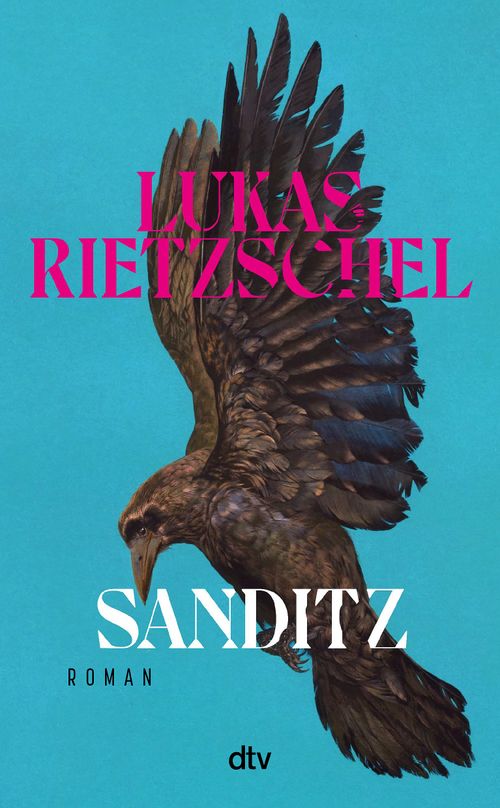
Discovering "Sanditz Buch": Lukas Rietzschel's Epic of German History, Pandemic, and the Ukraine War
Lukas Rietzschel, a celebrated voice of the post-Wende generation, has once again captivated readers with his latest novel, Sanditz Buch. This ambitious work transcends the confines of a simple narrative, offering a sprawling and deeply intimate portrait of contemporary Germany. From the quiet streets of a fictional Saxon town to the distant battlefields of Ukraine, and all set against the backdrop of the COVID-19 pandemic, Sanditz Buch is a masterful exploration of identity, family, and the relentless march of history. Hailed for its powerful language and intricate structure, this novel invites readers on a profound journey through personal and collective memory, making it a must-read for anyone seeking to understand the complexities of modern German life.
Rietzschel, born in Saxony's Oberlausitz region in 1994, has emerged as a significant literary figure, embodying the generation shaped by the reunification of Germany. His gentle irony and unglamorous public persona are mirrored in the grounded realism of his characters. The Sanditz: Rietzschel's Epic of East German Identity and Family delves into the profound ways the novel captures the nuances of this historical period, solidifying its place as a crucial contemporary text.
A Multigenerational Tapestry: The Wenzel Family and East German Identity
At the heart of the Sanditz Buch lies the Wenzel family, whose lives unfold across three generations in the eponymous fictional Saxon town. We are introduced to a cast of compelling characters, each grappling with their personal histories and the broader sweep of German social change. There's Dirk Wenzel, who, despite not being a father, is drawn to a poster proclaiming "Dream Job: Grandpa," hinting at a deep yearning for connection and legacy. His journey, including a pivotal intimate moment shortly after his mother's death, speaks to the complex interplay of grief, desire, and new beginnings.
Then there's Maria, Dirk's niece, whose experiences vividly illustrate the challenges of East German identity in a reunited Germany. While studying in Kassel, Maria, like many from the East, grew tired of confronting Western stereotypes. Her defiant self-introduction – "I'm Mandy from Dresden" – is a poignant symbol of reclaiming identity and resisting pigeonholing. Her eventual return to the Lausitz region mirrors Rietzschel's own trajectory, as he has spoken of truly becoming "East German" only after living in the West.
Maria's reflections on home are particularly evocative. For her, "home" isn't just a place but a deeply ingrained cultural lexicon: "Everything she knew, her concepts of the world, had formed into a dictionary in the East. If she thought of a tree, she saw a pine before her, slender and tall, its trunk coppery brown, branches far above. Her river was the Elbe, her stream the Elster, her horizon surrounded by hills, covered in rapeseed. Huge fields, artificial lakes, deep dark quarries, concrete slabs." This rich imagery underscores the profound sense of place and belonging that shapes the characters in Sanditz Buch, offering a vivid window into a specific regional identity. Characters like Norbert, the deceased organ builder who once traveled to the West, further tie the family's narrative to the historical divide and connection between East and West Germany.
The Pandemic as a Framework: Isolating Lives, Forcing Confrontations
The COVID-19 pandemic isn't merely a backdrop in the Sanditz Buch; it serves as a central structural element, weaving through the narrative from December 21, 2021, into the third year of the global health crisis. This period of isolation and uncertainty acts as a catalyst, intensifying existing family tensions, disappointments, and unspoken grievances within the Wenzel household. The novel masterfully uses the pandemic's restrictions and anxieties to force characters to confront their pasts and their relationships, revealing the cracks and strengths within their bonds.
Rietzschel employs a non-linear narrative, with the pandemic providing a continuous present that is punctuated by insightful flashbacks reaching back to 1978. This technique allows the author to draw compelling parallels between different eras of upheaval and personal struggle, demonstrating how historical events and past traumas continue to echo through the present. The forced proximity and introspection brought about by the lockdowns illuminate the profound impact of social and political changes on individual lives and family dynamics, making the Sanditz Buch a powerful commentary on resilience and vulnerability in tumultuous times.
From a Saxon Kleinstadt to the Front Lines: The Ukraine War
Just as readers become fully immersed in the intimate world of Sanditz and the Wenzel family, the narrative takes a dramatic turn, expanding its geographical and thematic scope. Towards the novel's conclusion, Tom, Maria's twin brother, leaves the quiet confines of his hometown to venture to the battlefields of Ukraine. This pivotal development elevates the Sanditz Buch beyond a purely domestic drama, connecting the deeply personal struggles of a Saxon family to a far larger, more immediate global conflict.
This storyline beautifully encapsulates the novel's broader themes of "Aufbruch und Niedergang" (breakdown and decline), "Gelingen und Scheitern des Aufruhrs" (the success and failure of rebellion), and the universal "Sehnsucht nach Freiheit" (longing for freedom) mentioned by the publisher. Tom's journey underscores how local lives are inextricably linked to global events, forcing characters and readers alike to ponder the nature of courage, responsibility, and the human cost of conflict. It's a bold narrative choice that imbues the novel with a compelling sense of urgency and relevance, bridging the gap between small-town concerns and international crises. The Lukas Rietzschel's Sanditz: Post-Wende Life in a Saxon Kleinstadt offers further context on how Rietzschel skillfully portrays the transformation of individuals within changing societal landscapes.
Why "Sanditz Buch" Resonates: Literary Prowess and Contemporary Significance
Lukas Rietzschel's Sanditz Buch is more than just a family saga; it is a "sprachmächtiger Roman" – a novel of powerful language – that skillfully pulls many narrative strings. Its multiperspectival approach weaves together the lives of the Wenzel family with a rich tapestry of other Sanditz residents: old officers, civil rights activists, organ builders, tile collectors, local journalists, self-proclaimed resistors, dreamers, early retirees, children, lovers, and reclusive archivists. This diverse cast creates a panoramic view of German stories, spanning from the end of the GDR to the present day, from the occupation of the local Stasi headquarters to the isolation of the pandemic, and the arduous work on West German construction sites.
The novel masterfully explores profound themes such as the desire for belonging, the complexities of friendship and family, and the pervasive impact of societal upheavals. It delves into the lingering questions of post-Wende Germany, offering a nuanced perspective on the challenges and transformations faced by East Germans. Rietzschel's prose is both precise and evocative, painting vivid pictures of landscapes and emotions that resonate long after the final page. It’s no wonder that the novel was considered a strong contender for the German Book Prize, with many critics arguing it deserved a spot on the shortlist for the Leipzig Book Fair Prize.
For readers looking for a deep dive into modern German literature, the Sanditz Buch offers invaluable insights into the historical and personal dimensions of a nation in flux. It’s a book that not only tells a compelling story but also provokes thought and encourages empathy for the diverse experiences that shape contemporary Germany. Its ability to connect the intimate struggles of a single family with the monumental events of recent history—from the fall of the Berlin Wall to the ongoing war in Ukraine—makes it an essential read.
In conclusion, Lukas Rietzschel's Sanditz Buch stands as a monumental literary achievement, truly a "great epic of our present." It is a testament to the power of storytelling to bridge generations, illuminate historical shifts, and confront the pressing issues of our time. Through the lens of the Wenzel family and the vibrant, complex community of Sanditz, Rietzschel offers a profound exploration of German identity, the enduring impact of the past, and the unexpected ways global events ripple through individual lives. This novel is a journey well worth taking for its rich narrative, compelling characters, and deep insights into the human condition.